
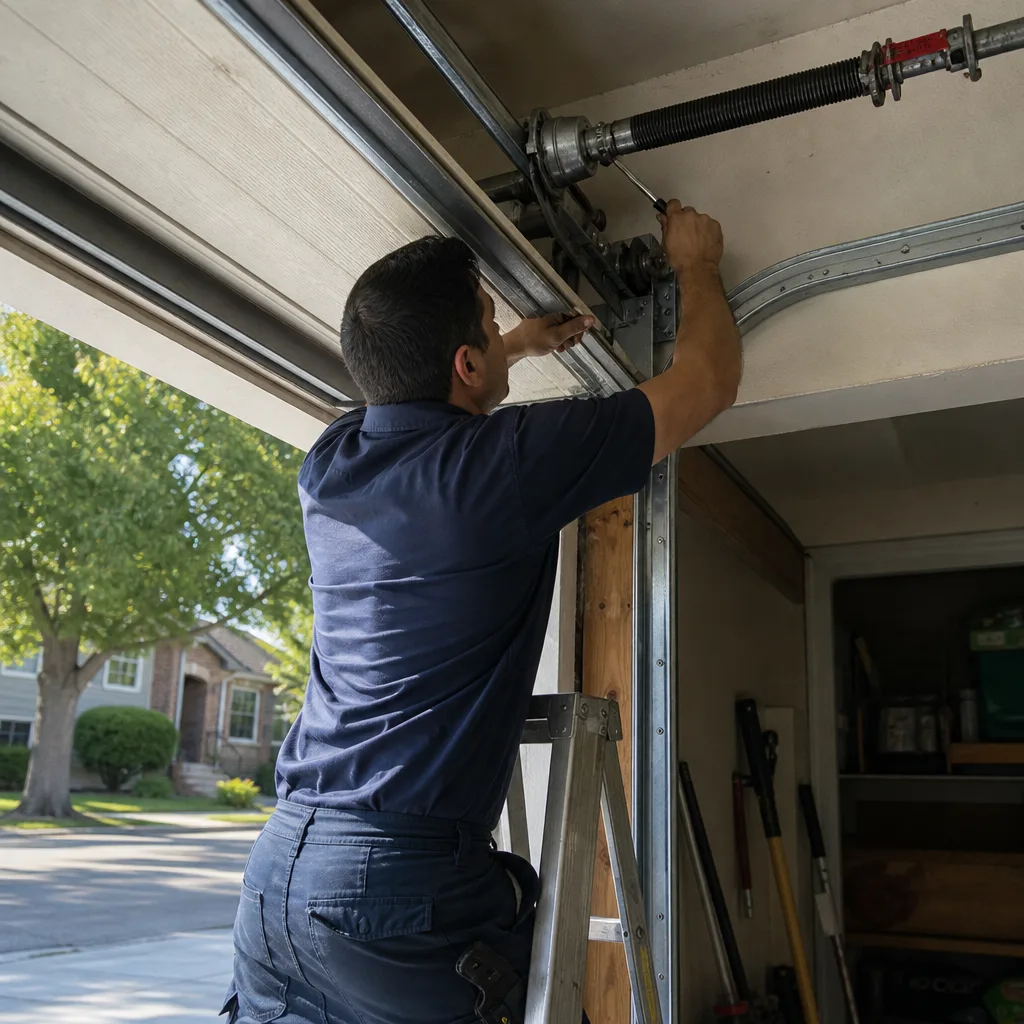
Last updated November 21, 2026
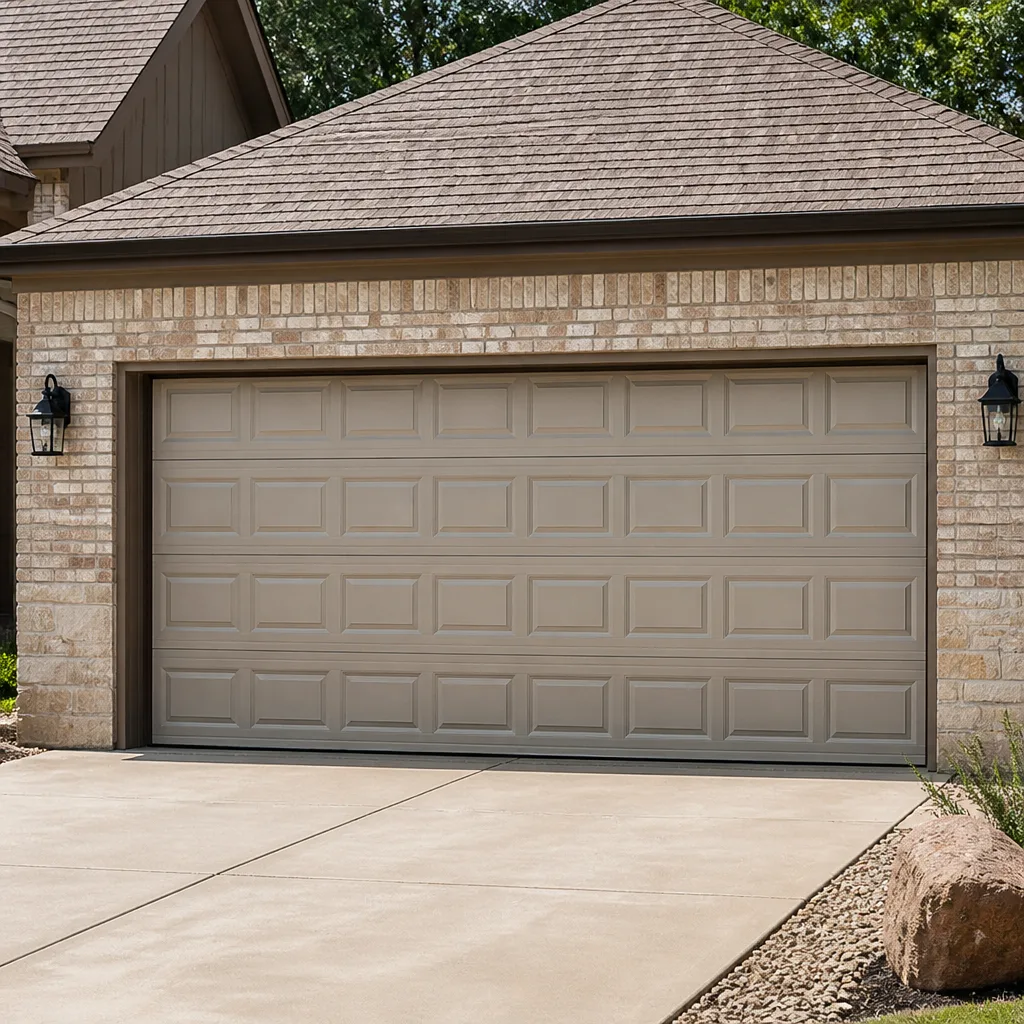 Raised-panel steel
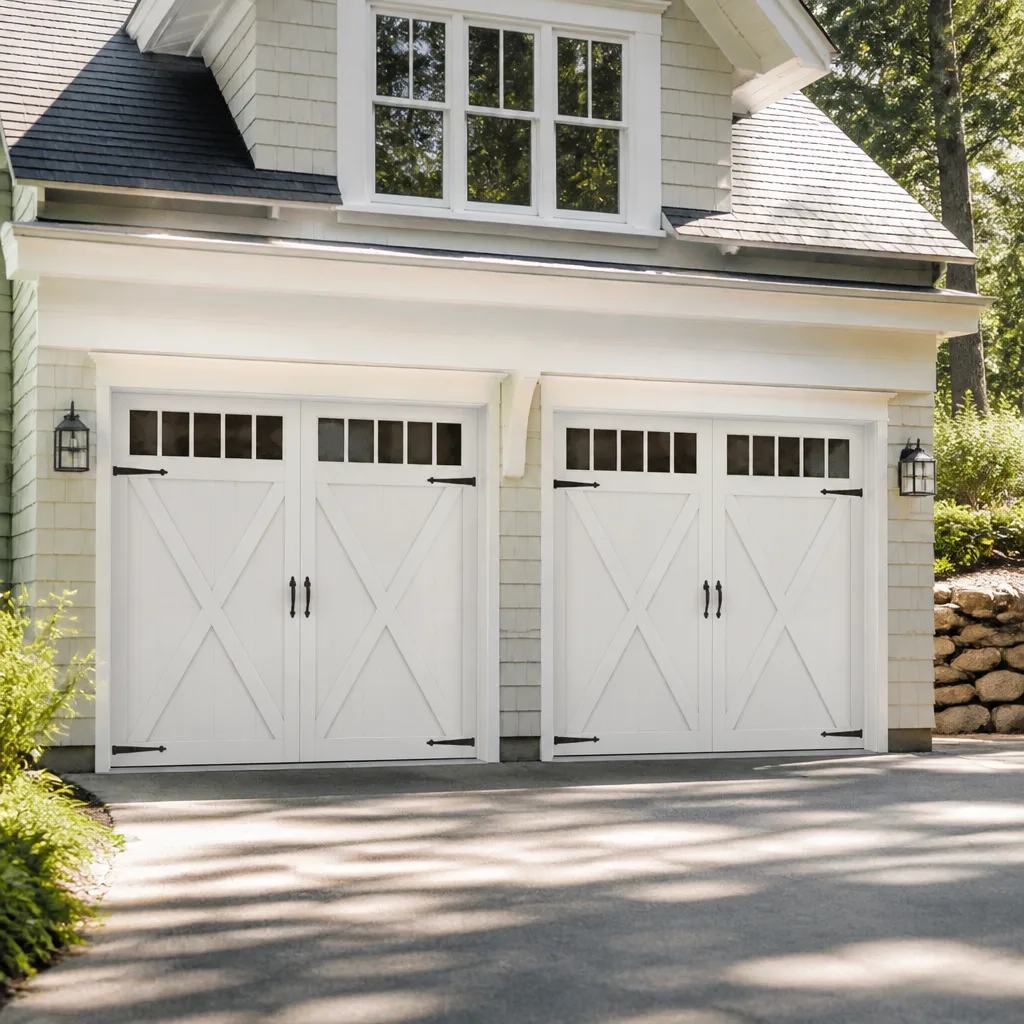 Carriage house
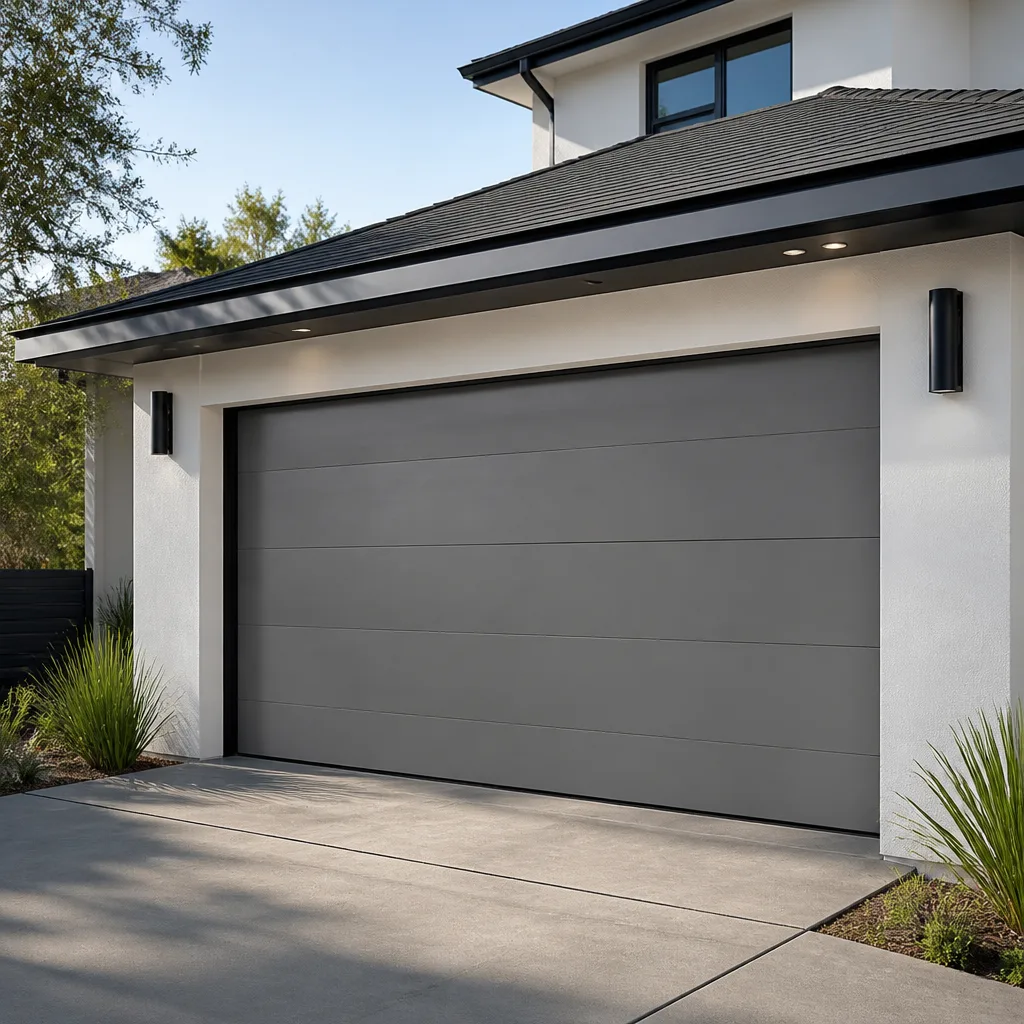 Modern flush
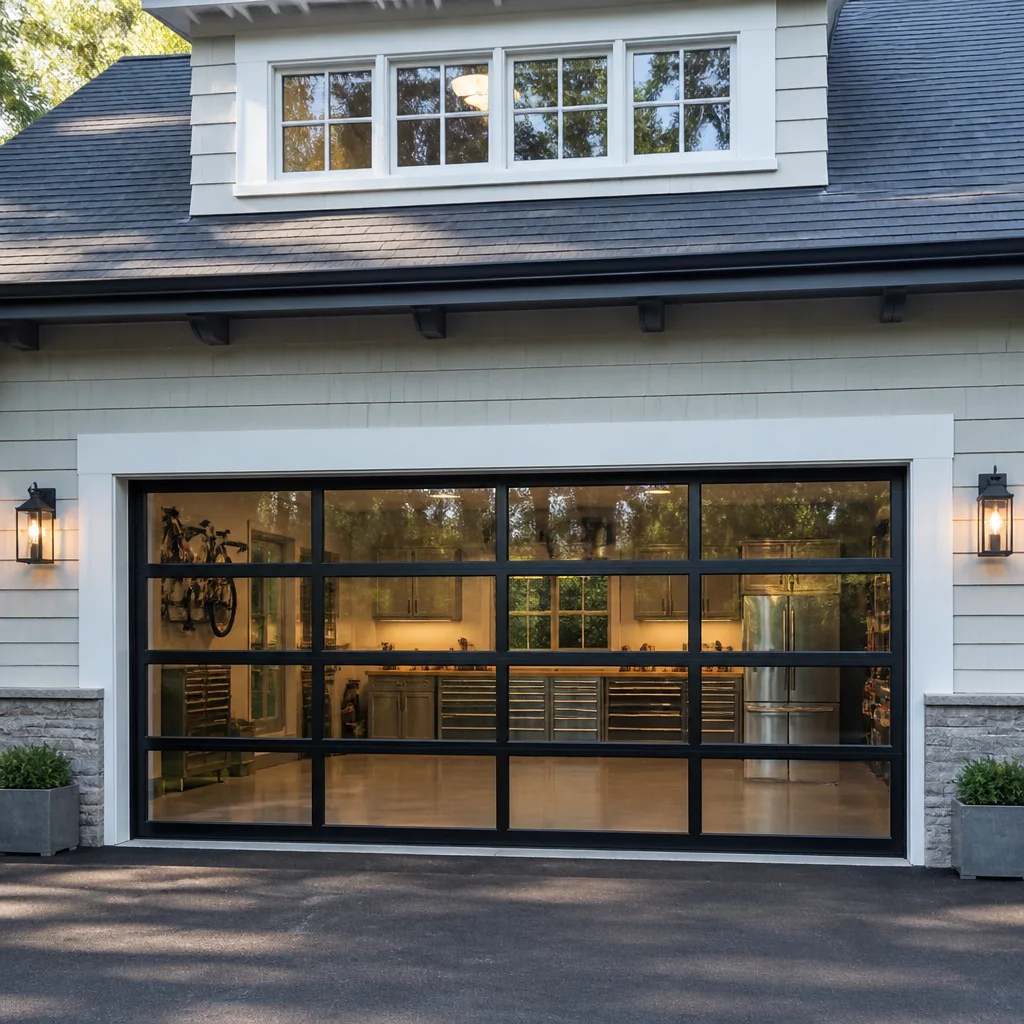 Full-view glass
 LiftMaster openers
 Chamberlain openers
Full 25-point door and opener safety check with every visit - springs, cables, rollers, tracks, and your LiftMaster or Chamberlain opener included
You get a price before we start. It does not change when the pro arrives.
Get your free estimateGarage Door Repair Maintenance Schedule: What to Do and When
Lubricating hinges once a year sounds reasonable until you realize a household averaging four cycles a day logs more than 1,400 cycles annually. That’s roughly the same stress a lightly-used commercial door sees, and it changes what your maintenance schedule should look like. Calendar intervals pulled from a manufacturer brochure don’t account for how often your door actually runs, what kind of springs it carries, or what a Lincoln Park winter does to grease and seals. This guide builds a schedule around those real conditions: monthly visual checks, semi-annual lubrication and balance testing, and an annual professional inspection, each with the specific tasks that matter for a door carrying a Genie or Clopay opener in this climate.
Quick Answer
A garage door maintenance schedule should combine a monthly visual inspection of cables, rollers, and hardware, semi-annual lubrication and a manual balance test, and an annual professional inspection of springs, opener force settings, and structural alignment. In Lincoln Park, add a fall lubrication pass with low-temperature grease before the first hard freeze, because standard lithium spray thickens and stops protecting moving parts in cold weather. Expect bottom seals to last about 3-5 years, steel rollers 4-6 years, and standard torsion springs 10,000-20,000 cycles depending on the rating.
Styles & brands we work with
- Raised-panel steel
- Carriage house
- Modern flush
- Full-view glass
- LiftMaster openers
- Chamberlain openers
Table of Contents
- Why Cycle Count Matters More Than the Calendar
- Monthly Visual Checks: The 10-Minute Walkaround
- Semi-Annual Tasks: Lubrication and the Balance Test
- Annual Professional Inspection: What We Look At
- Why Chicago Winters Demand a Fall Lubrication Pass
- Parts With a Fixed Service Life: Seals, Rollers, Springs
- How to Calculate Your Spring Replacement Window
- Brand-Specific Notes: Genie, Clopay, Amarr, Wayne Dalton
Why Cycle Count Matters More Than the Calendar
Every garage door part wears on cycles, not months. A spring rated at 10,000 cycles will fail the same way whether it takes four years or twelve to get there. The manufacturer’s “inspect annually” advice is a floor, not a schedule tuned to your household. If you drive to work each weekday and run errands on Sunday, you’re at three to four cycles a day. If two cars come and go, or a family member works from home, that number climbs to six or eight.
We’ve seen this play out across Lincoln Park’s mix of walk-ups, greystones, and single-family homes along the side streets off Halsted and Armitage. A door that runs four times a day reaches 1,460 cycles a year. At 10,000 rated cycles, that’s a spring replacement window of roughly seven years under normal use; at 20,000 rated cycles it stretches to about thirteen. The math isn’t precise to the year, but it tells you whether to plan for a spring replacement soon or to keep it on your radar.
The same logic applies to rollers, hinges, and the opener’s drive system. High-cycle households wear through steel rollers faster and see more opener strain. If your door runs eight times a day, treat every interval in this guide as shortened by about a third. If it runs once or twice a day, you have some slack.
How to Estimate Your Household Cycle Count
- Count the cars that park inside and how many trips each makes per day.
- Add uses for deliveries, gardening equipment, or bikes pulled in and out.
- Multiply that number by 7 for a weekly figure, then by 52 for an annual estimate.
- Write the number down and revisit it once a year, especially after a household change like a new driver or a work-from-home shift.
That annual number is the foundation of everything else in this guide. It’s also the number to mention when you call for garage door repair so the technician can match you with the right spring rating instead of a generic replacement.
Monthly Visual Checks: The 10-Minute Walkaround
A ten-minute visual check once a month catches most developing problems before they become repair jobs. You’re not fixing anything at this stage, just looking and listening. Do it with the door closed first, then with it open.
Start with the door closed. Look at the springs above the door if you have torsion springs, or along the side tracks if you have extension springs. Check for visible gaps in coils, rust along the length, or a spring that looks stretched out of shape. Do not touch the springs, and never try to adjust or tighten the winding hardware. Springs sit under high tension, and the winding process requires specific tools and technique. If something looks wrong, that’s the moment to call a professional. Springs are dangerous. This is exactly the work we do.
Then check the visible hardware:
- Cables: Look for fraying, kinks, or slack on either side. A cable off its drum is a same-day issue.
- Rollers: Nylon rollers should be smooth and round; steel rollers shouldn’t be flat-spotted or wobbly.
- Hinges: Look for loose screws or cracked metal at the hinge plates.
- Bottom seal: Check for tears, gaps at the floor, or a seal that has hardened and lost its flex.
- Track alignment: Tracks should look straight and parallel. Any bend means the rollers are straining.
- Weatherstripping: Around the frame, look for cracks or pieces peeling away.
When the door is open, listen. A grinding, squealing, or rattling door usually means worn rollers or dry hinges. A door that pauses or reverses is a sign of a force-setting issue or an obstruction. Note anything odd and keep the note until your next semi-annual service.
Semi-Annual Tasks: Lubrication and the Balance Test
Twice a year, lubricate the moving metal parts and run a balance test. This is the most useful maintainable work a homeowner can do without touching springs or cables. It also catches the single most important DIY diagnostic most homeowners have never tried.
The Balance Test
Disconnect the opener using the manual release cord so the door runs on its springs alone. Lift the door by hand to about waist height and let go. A properly balanced door should stay put within a few inches. If it drops fast, the springs have lost tension. If it rises on its own, the springs are over-tensioned. Either result means a professional needs to look at the spring system before you keep cycling the door.
Run this test twice a year and any time the door feels heavier than usual. It’s a five-minute job and it tells you more about spring health than any visual inspection.
Lubrication: What to Use and What to Skip
Use a silicone-based or lithium grease rated for cold temperatures on hinges, rollers, and the torsion bar bearings. Avoid WD-40 as a long-term lubricant; it cleans and displaces water but evaporates quickly and leaves metal dry. Avoid grease on the tracks themselves; tracks should be clean and dry, not greasy.
- Wipe down each hinge point with a clean rag to remove old grease and grit.
- Apply a thin coat of lubricant to each hinge pivot, each roller stem, and the torsion bar bearings.
- Spray a small amount into the opener’s rail where the trolley rides (on chain and belt models).
- Wipe off any overspray on the panels or the floor.
- Cycle the door twice and listen for improvement.
For a Lincoln Park door with an older Genie or Clopay opener, also check the opener’s manual for any manufacturer-specific lubrication instructions. Some belt-drive openers need no rail lubrication at all. A quick look at the manual saves you from over-lubricating a part that doesn’t need it.
Annual Professional Inspection: What We Look At
Once a year, a trained technician should inspect the parts that homeowners shouldn’t touch and the adjustments that require specific tools and knowledge. Even if everything looks fine on your monthly walkaround, an annual inspection catches subtle wear before it becomes a failure.
An inspection covers:
- Spring condition and tension: Measuring coil gaps, checking for fatigue, and confirming the spring rating matches the door’s weight.
- Cable and drum condition: Checking for winding errors, fraying at the drum, and correct cable tracking.
- Roller and hinge replacement needs: Identifying rollers that are close to failure and hinges with worn bushings.
- Opener force and travel settings: Confirming the opener stops and reverses correctly and doesn’t strain against the door.
- Safety reverse test: Placing an object under the door to confirm the auto-reverse function trips as it should. This is a legal safety requirement on all openers made after 1993.
- Panel and structural alignment: Checking for bent sections, loose hinges pulling panels out of square, and any sagging.
- Weather seal integrity: Checking the bottom seal and side weatherstripping for gaps that let cold air and pests in.
If any part needs replacing, an experienced garage door opener repair or hardware service can handle it in the same visit. Bring the annual inspection list to your technician so nothing gets missed. This is also the right time to schedule a garage door installation quote if the door has reached the end of its serviceable life.
Why Chicago Winters Demand a Fall Lubrication Pass
Standard lithium spray grease works fine in mild weather but turns tacky and stiff once temperatures drop below freezing. Lincoln Park’s winters regularly push into single digits, and a door that was lubricated in June with a standard spray will be running on stiff grease by January. That extra friction wears rollers, strains the opener, and can make the door hesitate or stall.
Before the first hard freeze, do a fall lubrication pass with a grease rated for low temperatures. A synthetic grease with a low pour point or a silicone-based lubricant designed for cold climates holds up better. Pay particular attention to the hinges, the torsion bar bearings, and the opener’s rail if it’s a chain-drive model. Belt-drive openers usually need less, and the manual will tell you if the rail needs anything at all.
Alongside the fall lubrication, check the bottom seal. Cold weather makes a worn seal brittle, and a brittle seal cracks and pulls away from the floor. A new seal installed before winter keeps cold air out and prevents ice from creeping in under the door. Winter is also when rollers that were borderline in the fall tend to fail, so replace anything that was already wobbly. Clopay and Wayne Dalton doors with aluminum or steel bottom retainers are straightforward to re-seal; wood doors may need a different seal profile, and that’s a conversation for the technician.
A pre-winter tune-up is worth the call. We answer 24/7. Fast dispatch from 7am to 7pm, Sunday through Friday. One visit in October saves a much longer visit in February.
Parts With a Fixed Service Life: Seals, Rollers, Springs
Some parts simply wear out on a predictable timeline. Knowing which parts and roughly how long they last helps you plan and budget instead of getting surprised. These intervals assume normal residential use, roughly three to four cycles a day, in a Chicago climate.
- Bottom seal: 3-5 years. Tears, hardens, and shrinks with temperature swings. A $30-50 part on its own, replaced in minutes.
- Steel rollers: 4-6 years. Nylon rollers can stretch further but eventually flat-spot.
- Nylon rollers: 6-8 years in moderate use.
- Hinges: 5-8 years, longer if lubricated regularly.
- Standard torsion spring: 10,000-20,000 cycles depending on the rating. A high-cycle spring rated at 25,000+ cycles is available for busy households.
- Opener drive belt or chain: 10-15 years.
- Opener itself: 10-15 years before motor or logic board failures become common.
Amarr and Clopay doors tend to hold their hardware well past these intervals when lubricated regularly, but even the best-maintained door needs seal and roller replacements at some point. Think of these as consumables, like brake pads on a car.
Roller Replacement: What to Expect
Rollers are the cheapest per-unit wear item on the door. Replacing all of them takes about 20-30 minutes with the door locked in place. Steel rollers cost less but wear faster and make more noise. Nylon rollers cost more but run quieter and last longer. For a Lincoln Park home with a bedroom above the garage, nylon rollers are often worth the small price difference.
How to Calculate Your Spring Replacement Window
Spring life is measured in cycles, so your household’s daily use dictates the replacement window far more than the calendar does. Here’s a straightforward way to estimate it.
- Establish your daily cycle count. Count each door opening and closing as one cycle. Two cars going out in the morning and returning in the evening is four cycles.
- Confirm your spring’s rated cycles. Standard springs are rated at 10,000; high-cycle springs are rated at 20,000 or more. The rating is printed or engraved on the spring end.
- Divide the rated cycles by your annual cycles. A 10,000-cycle spring at 1,460 cycles a year gives you roughly seven years. The same spring at 3,650 cycles a year gives you under three.
- Plan the replacement 20-30% before that number. Springs fatigue gradually; they don’t fail on the exact count. Planning ahead avoids a mid-winter surprise.
For a typical Lincoln Park household at four cycles a day, we generally suggest planning the spring replacement around year six or seven for a standard 10,000-cycle spring, or around year twelve if the door was spec’d with a high-cycle spring. The written estimate sets the final price, and we can quote the replacement before you’re in a repair situation.
Remember: when one spring fails on a two-spring door, both are usually replaced as a matched pair so the remaining spring doesn’t fail soon after. A spring price in this guide is for one spring; a pair costs about twice that.
Brand-Specific Notes: Genie, Clopay, Amarr, Wayne Dalton
Different brands build around different hardware conventions, and knowing which one is in your garage tells you what to expect from a service visit. We work on the brand already in your garage, so the notes below are what we typically look at when those brands come up.
Genie Openers
Genie’s belt and chain models use a specific trolley carriage that can wear flat spots on the rail over long use. Force settings need periodic readjustment, especially after a spring change. The opener safety-reverse test is the one check to run twice a year regardless of brand.
Clopay Doors
Clopay panel doors with their heavier insulated construction put more load on the torsion springs, which means the spring rating matters more than on a lighter door. If you have a Clopay insulated door, check the spring rating when you estimate your replacement window. A door spec’d with a high-cycle spring isn’t necessarily the same rating as a standard door of the same size.
Amarr Doors
Amarr’s residential line typically ships with standard torsion hardware that’s straightforward to service. Bottom seal and weatherstripping profiles vary by panel series, so match the model when replacing the bottom seal. A generic seal won’t seat correctly on all Amarr doors.
Wayne Dalton Doors
Wayne Dalton’s TorqueMaster spring system is a proprietary design that requires specific tools and knowledge. If you have one, don’t try any DIY spring adjustment; the internal spring is under the same tension as a torsion system and enclosed in a tube that requires a proper tool to release. This is one of the reasons we cover a wide brand range: without brand knowledge, a technician may decline the job or improvise the tool, and both are risky.
If you need a part replaced and aren’t sure of the model, an experienced Garage Door Repair Lincoln Park technician can identify the brand and model from the door’s hardware and openers and match the correct replacement part.
Common Mistakes to Avoid
- Waiting for the door to break before doing anything. Springs, rollers, and seals wear gradually; small replacement costs turn into large repair costs when a worn spring finally fails on a cold morning.
- Lubricating the tracks. Grease on the tracks attracts grit and makes the door worse. Tracks should be clean and dry; only hinges, rollers, and bearings get lubricant.
- Using WD-40 as a long-term lubricant. It cleans and displaces moisture but evaporates quickly and doesn’t protect against wear. Use a proper grease rated for cold weather instead.
- Skipping the fall lubrication pass. Lincoln Park winters are hard on standard grease. A spring layer of cold-rated grease before the first freeze saves roller wear and opener strain through the whole season.
- Trying to adjust or replace springs yourself. Torsion and extension springs are under high tension and can cause serious injury if handled with the wrong tools. This is work for a trained technician, not a homeowner with a YouTube video.
- Replacing only one spring on a two-spring door. The remaining spring has the same age and wear; replacing it alone means a second repair in short order. Matched pairs are standard practice.
- Ignoring the balance test. A door that drops quickly on the manual test is a spring issue that will only get worse. Running the test twice a year catches it early.
See the difference
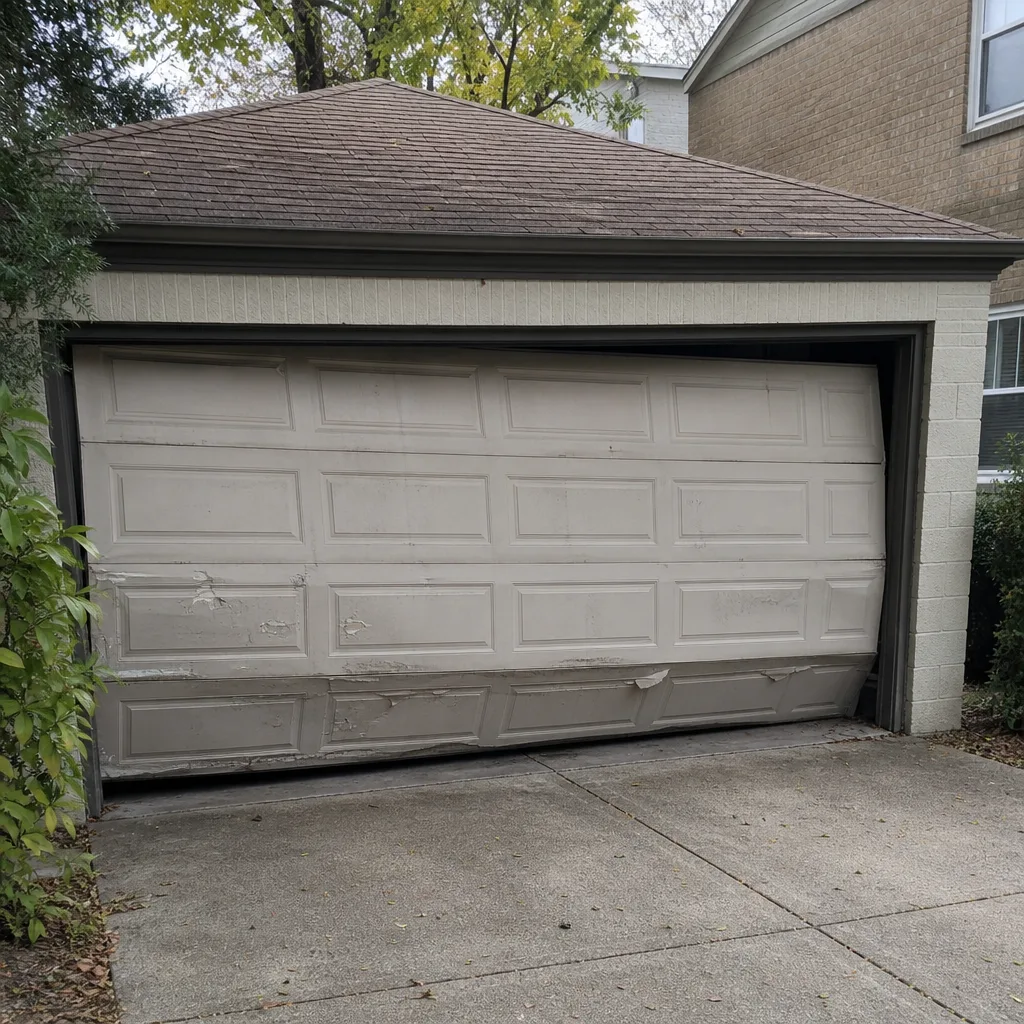 Before
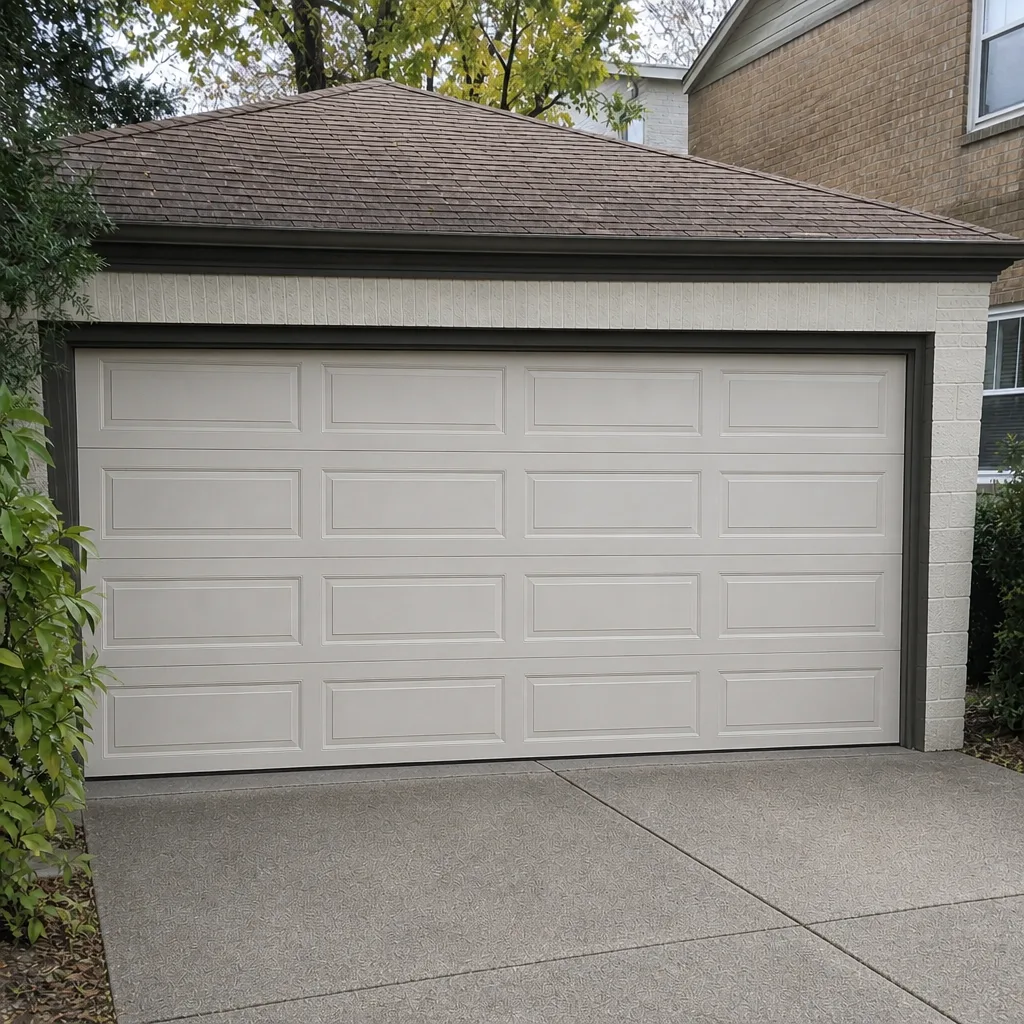 After
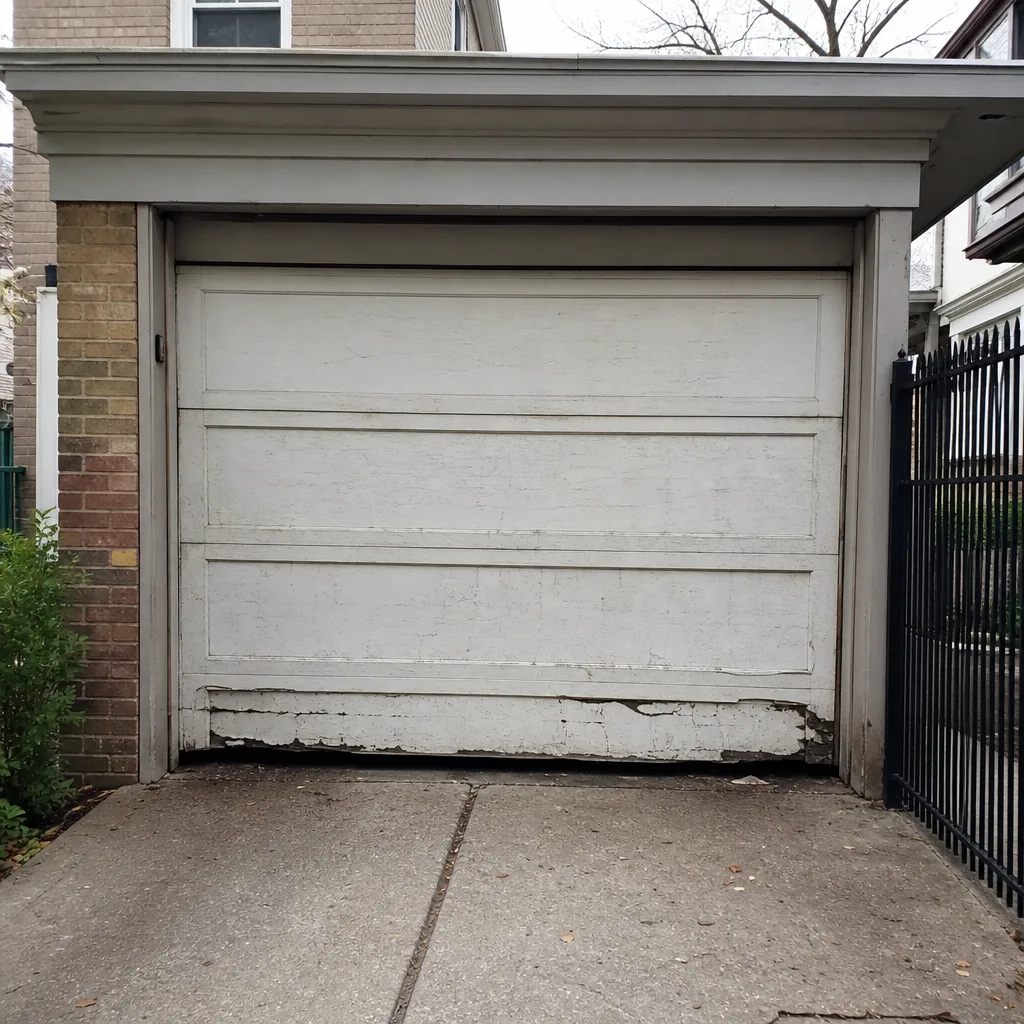 Before
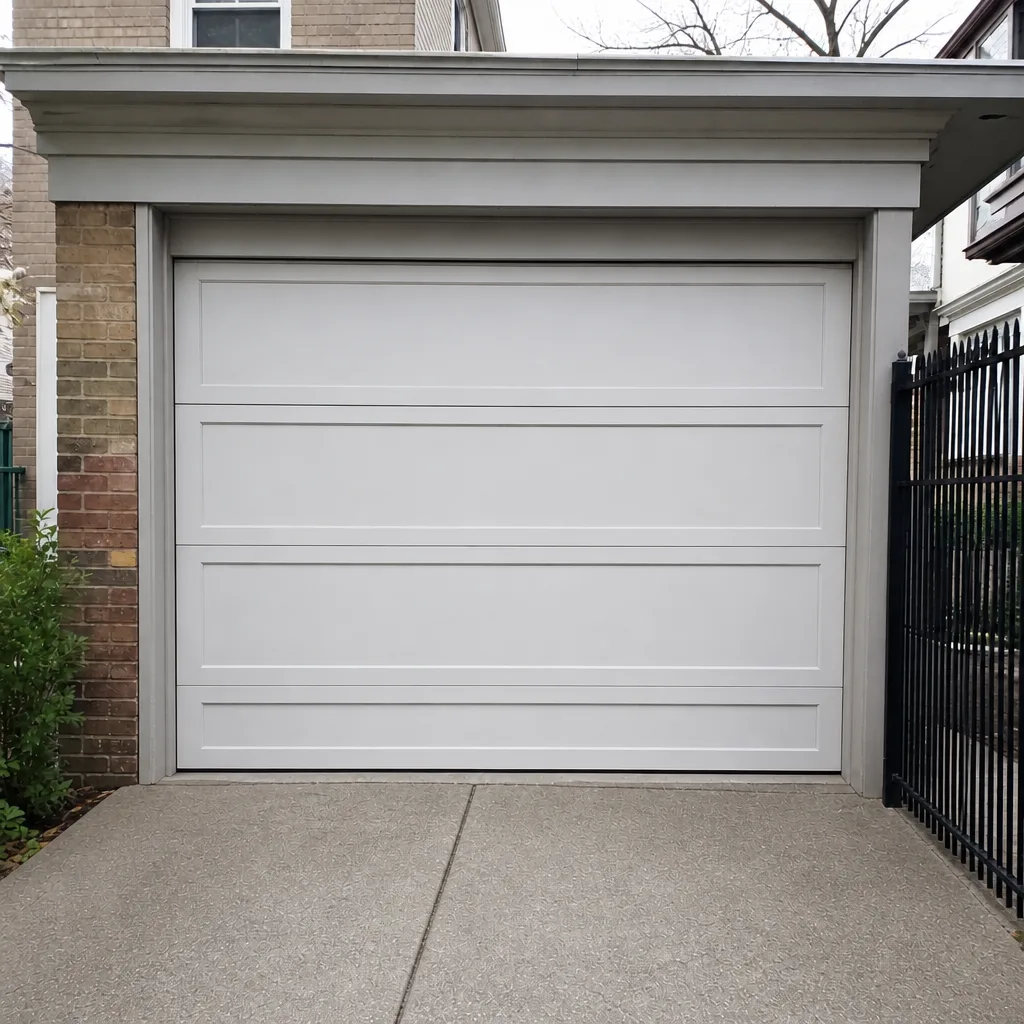 After
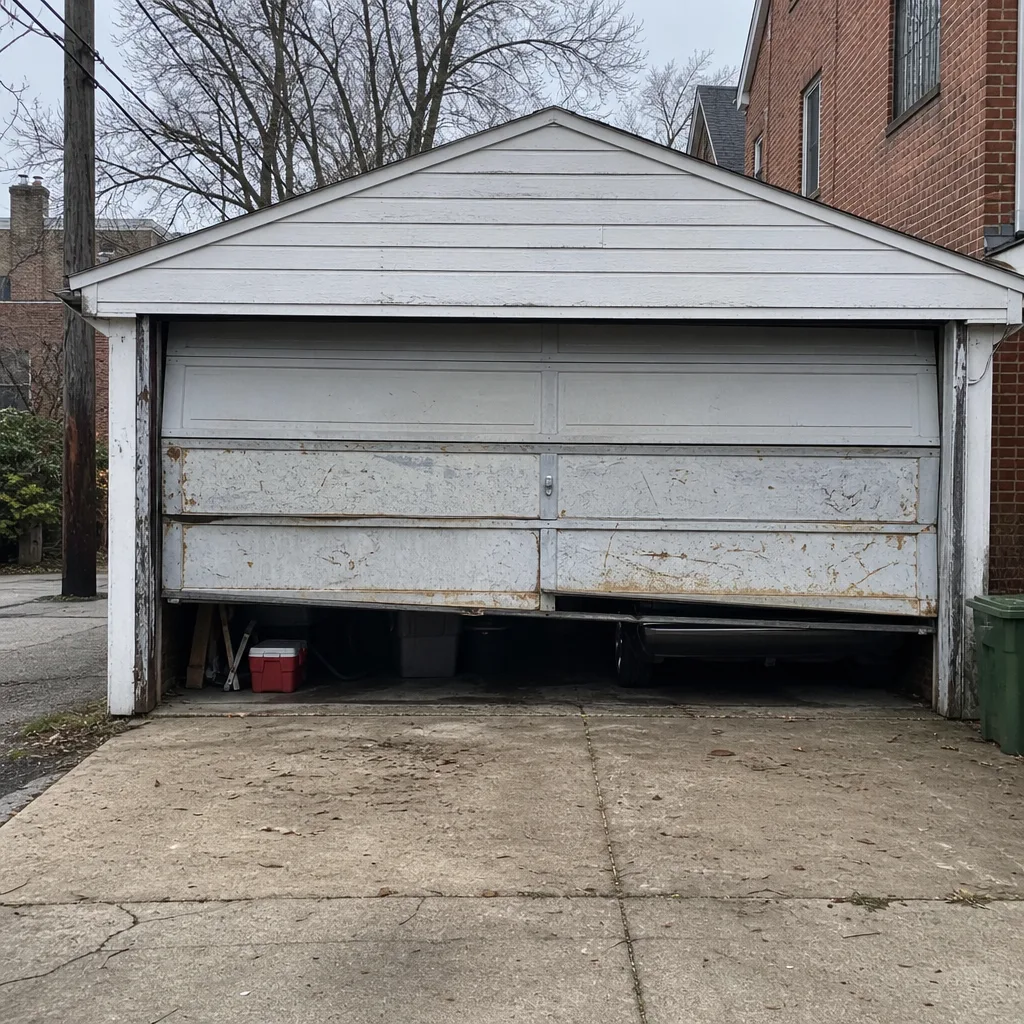 Before
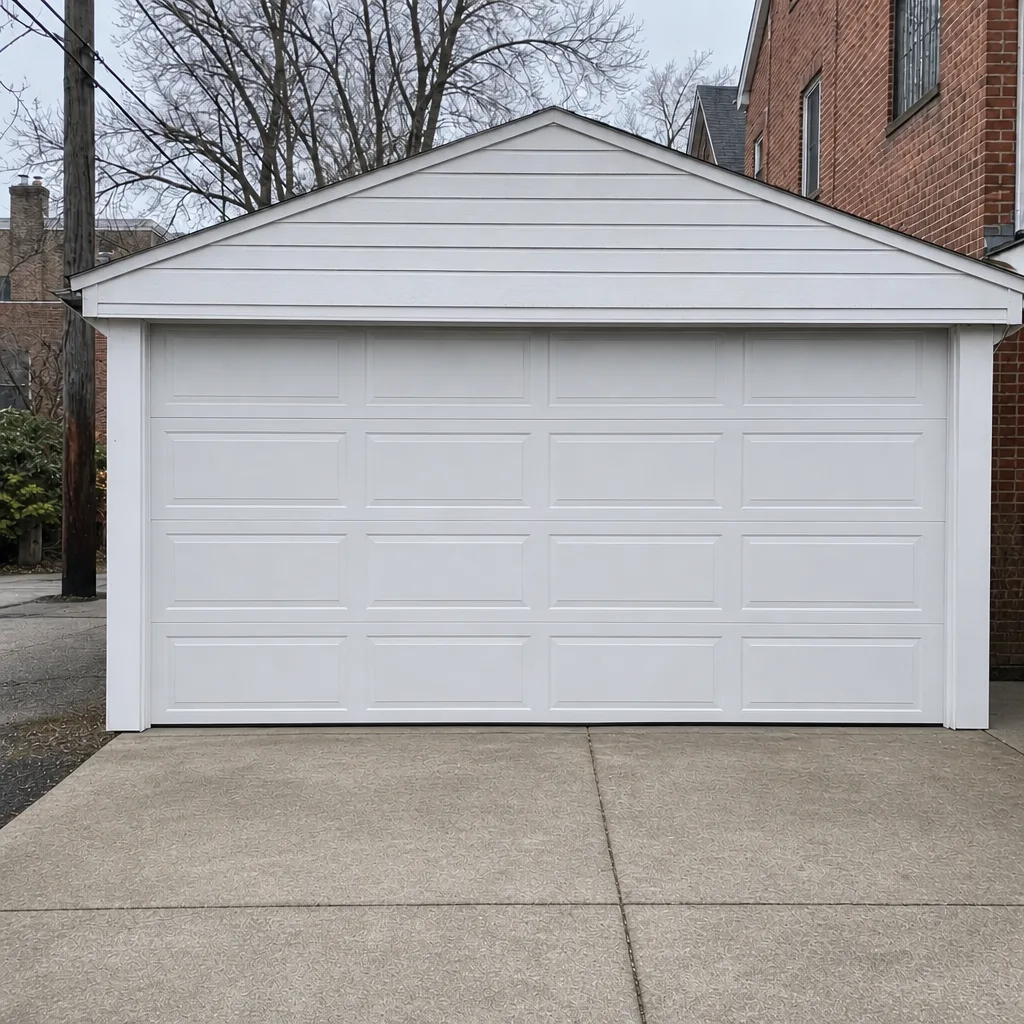 After
When to Call a Professional
Some things sit safely on the maintenance calendar, some need a same-day call. Spring adjustments, cable replacement, and any work that involves high-tension hardware are always professional work. A door that won’t close, reverses without an obstruction, or runs with a changed sound from the opener qualifies for a fast dispatch too. Same-day repair is available, and parts supply is available so you aren’t sent to the big-box store mid-repair.
For annual inspections and pre-winter tune-ups, plan ahead; those can be scheduled any week Sunday through Friday. For a spring that’s snapped, a cable that’s come off its drum, or an opener that won’t lift the door, call immediately. Garage Door Repair Lincoln Park offers free estimates in Lincoln Park. Call (855) 658-5155. We answer 24/7. Fast dispatch from 7am to 7pm, Sunday through Friday. Our technicians have up to 12 years of experience and work on LiftMaster, Chamberlain, Genie, Clopay, Amarr, Wayne Dalton, Craftsman, and Raynor systems.
Frequently Asked Questions
A garage door should get a homeowner walkaround monthly, lubrication and a balance test every six months, and a professional inspection once a year. In Lincoln Park, add a fall lubrication pass with cold-rated grease before the first hard freeze. The annual professional inspection is the most important of the three tiers, because it’s the only point at which springs, opener force settings, and structural alignment get properly evaluated.
Run the balance test: disconnect the opener, lift the door to waist height, and let go. If the door drops fast, the spring has lost tension. If it rises on its own, the spring is over-tensioned. Visible coil gaps, a stretched appearance, or a snapped spring are also signs. At that point, call for a professional spring inspection. Springs can cause serious injury if handled incorrectly.
A silicone-based or synthetic grease rated for low temperatures is the right choice. Standard lithium spray thickens and loses effectiveness below freezing, and Lincoln Park winters regularly hit single digits. Apply it to hinges, roller stems, and torsion bar bearings, but keep the tracks clean and dry. A fall lubrication pass before the first freeze protects moving parts through the season.
Standard torsion springs are rated for 10,000-20,000 cycles, and the actual lifespan depends on how often you use the door. A Lincoln Park household running four cycles a day typically gets six to seven years out of a 10,000-cycle spring, and about twelve to thirteen years out of a 20,000-cycle spring. High-cycle springs rated above 25,000 cycles are available for busier households. When replacing, both springs should be replaced together if the door has two.
Yes, replacing a bottom seal is straightforward and safe for most homeowners if you match the seal profile to your door. The trick is getting the right profile: Clopay, Amarr, and Wayne Dalton all use slightly different bottom retainer shapes. A seal that doesn’t seat correctly can leave gaps that let cold air in during Lincoln Park winters. If you aren’t sure of the model, a parts supply visit can match it correctly.
A tune-up and inspection is a per-job price, set by a written estimate before any work starts. The estimate is free, and the price covers the inspection, lubrication, balance test, and adjustment of opener settings. Call (855) 658-5155. We answer 24/7. Fast dispatch from 7am to 7pm, Sunday through Friday. For an exact quote, ask for a free estimate.
A door that won’t open or close, reverses without an obstruction, moves with a grinding or squealing sound, or visibly sags is a repair, not maintenance. A door that opened smoothly last week but now pauses or struggles is worth a same-day call, because the problem typically gets worse and often involves the spring or opener. Maintenance prevents these issues; once they’re present, you’re looking at repair.
Yes. The homeowner can only see part of what matters. Spring tension, opener force settings, cable condition behind the drum, and roller wear inside the track all need trained eyes and the right tools. An annual inspection catches wear before it becomes failure, and it costs less than a mid-winter repair. Plan it once a year, ideally in the fall before winter.
The Bottom Line
Your garage door maintenance schedule should be built around cycles, not months. Count your daily cycles, estimate your annual figure, and use that to place spring replacement on the calendar years ahead of failure. Run a balance test every six months. Lubricate twice a year and switch to cold-rated grease for the Lincoln Park winter. Plan a professional inspection once a year. Expect bottom seals to last 3-5 years, steel rollers 4-6, and standard springs 10,000-20,000 cycles depending on the rating. Match parts to the brand in your garage, whether that’s Genie, Clopay, Amarr, or Wayne Dalton. A door that runs reliably through the cold months is a door on a schedule, not a door that gets attention only when something breaks.
Call (855) 658-5155 for a free estimate on inspection, spring repair, or any part of your maintenance plan. We answer 24/7. Fast dispatch from 7am to 7pm, Sunday through Friday. Parts supply and written estimates on every job.
Written by the team at Garage Door Repair Lincoln Park.