
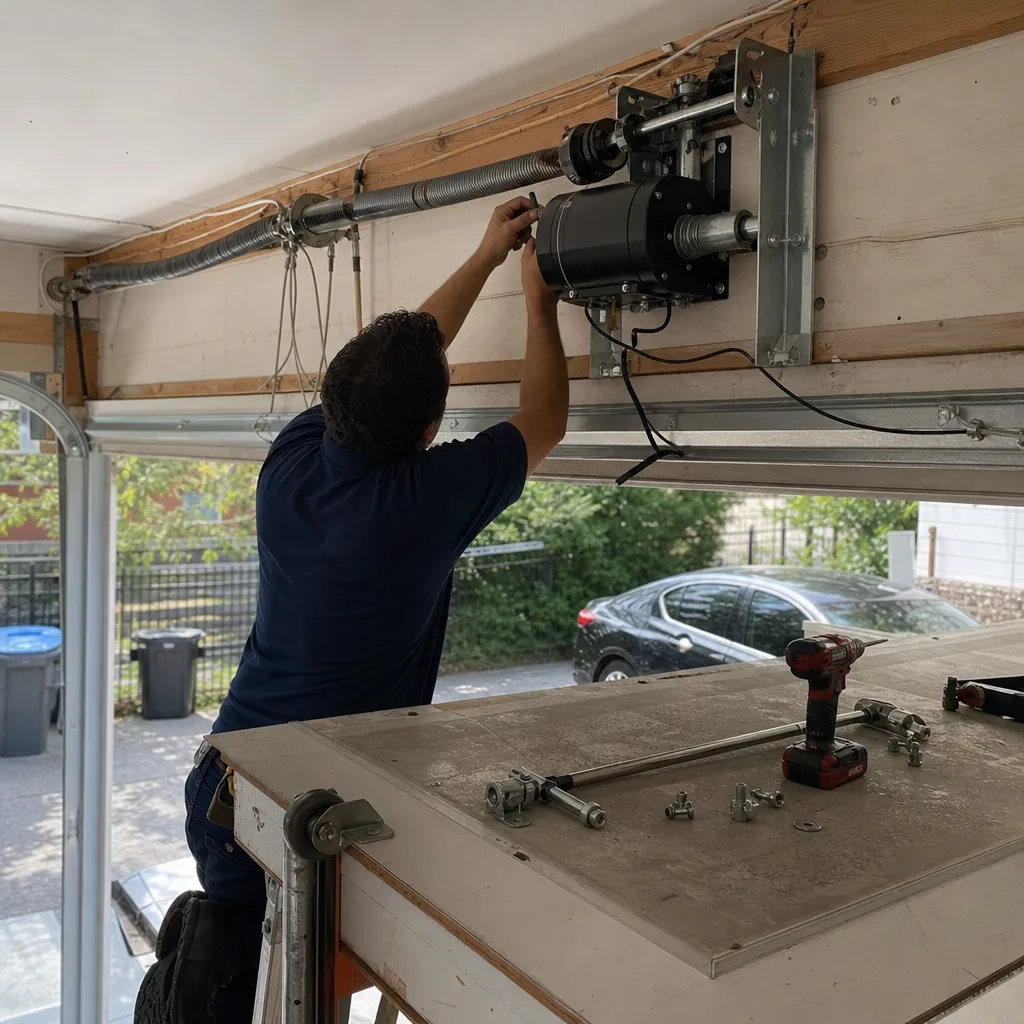
Last updated November 21, 2026
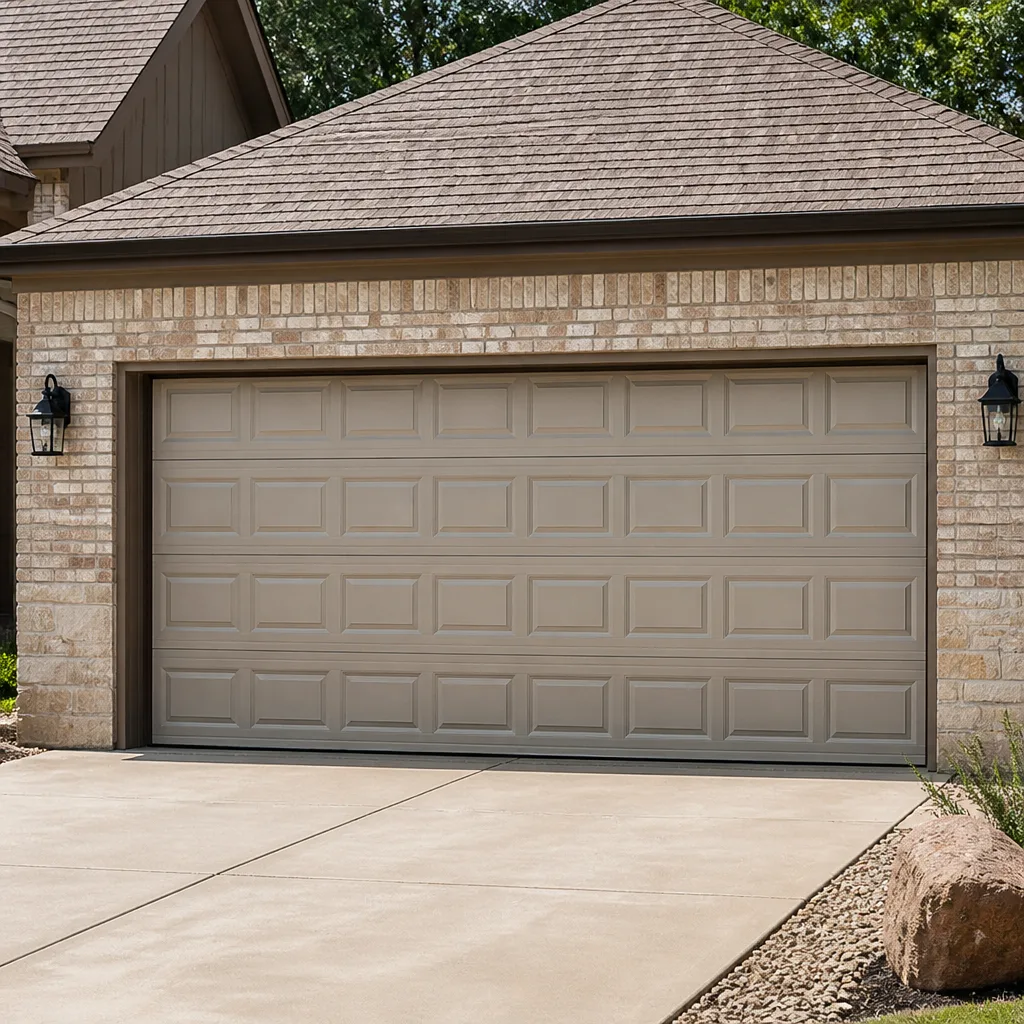 Raised-panel steel
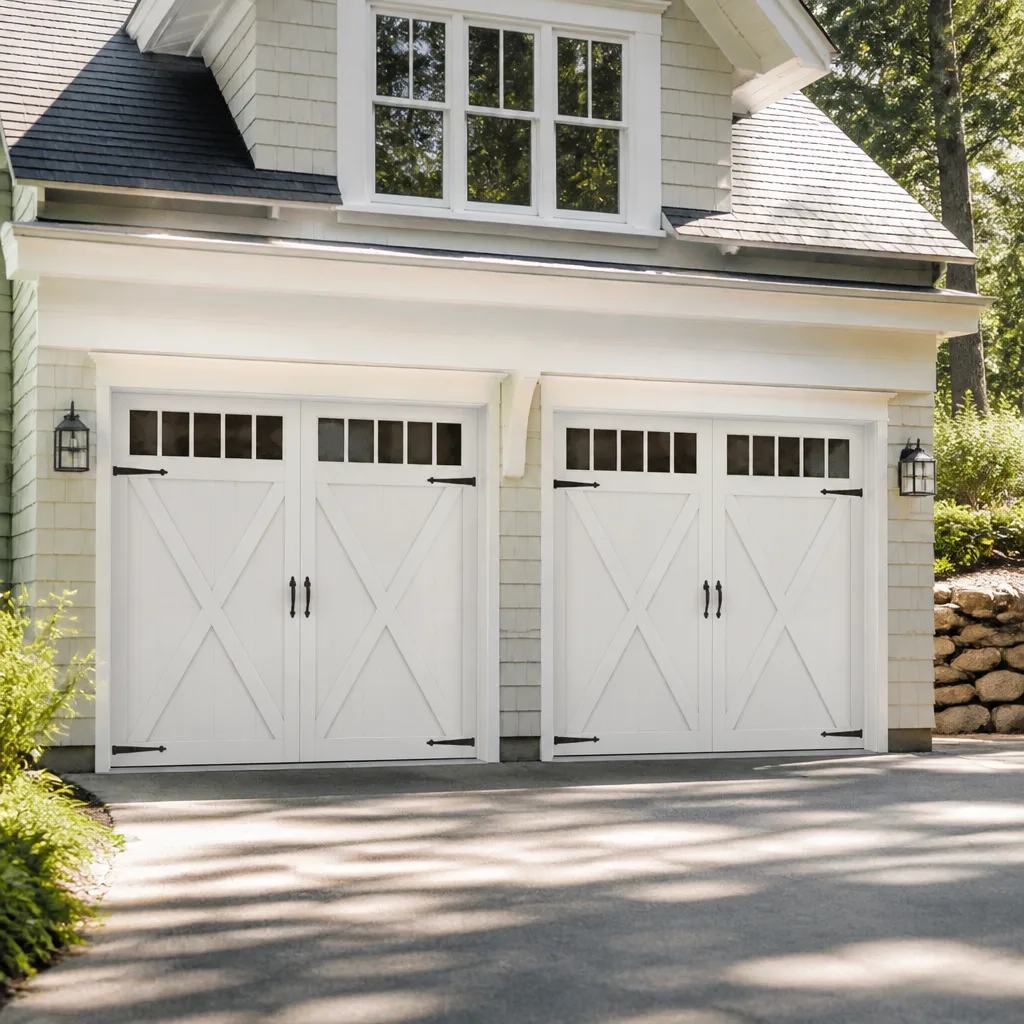 Carriage house
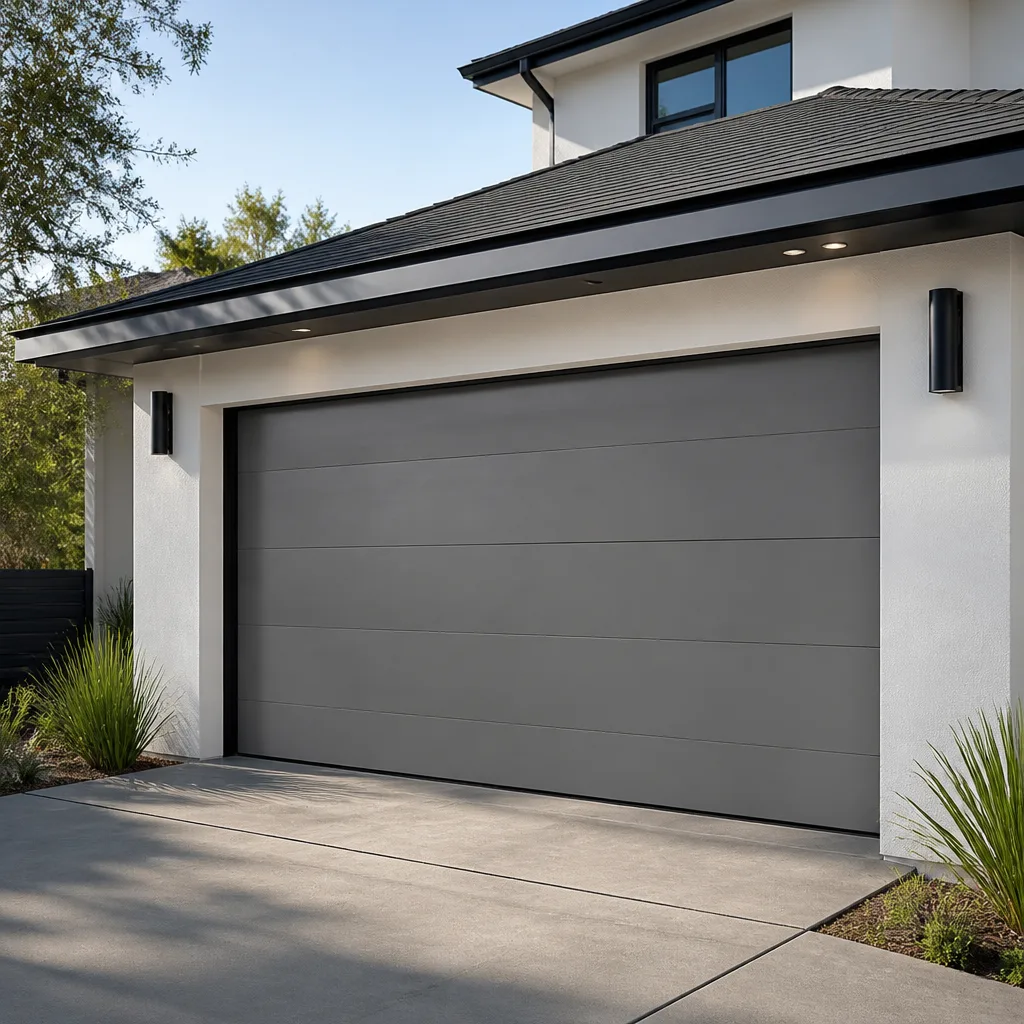 Modern flush
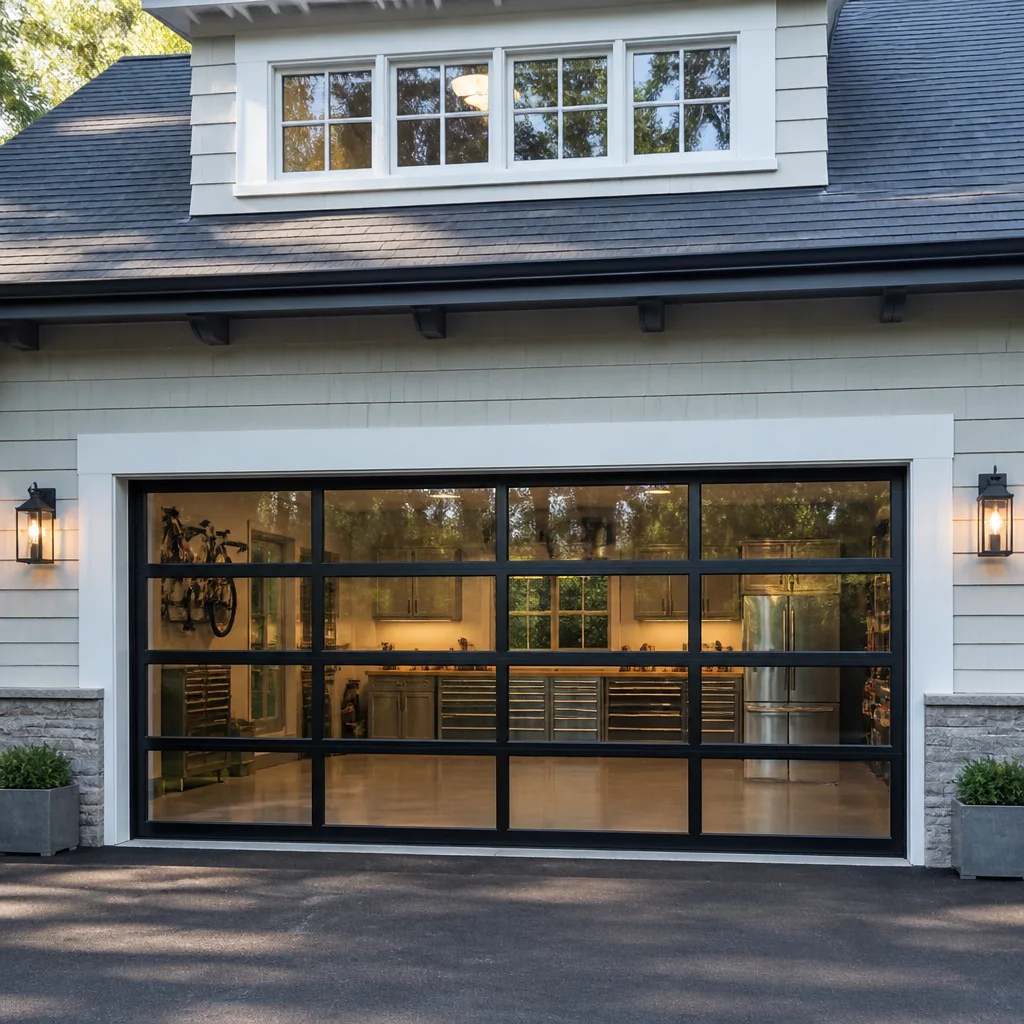 Full-view glass
 LiftMaster openers
 Chamberlain openers
Full 25-point door and opener safety check with every visit - springs, cables, rollers, tracks, and your LiftMaster or Chamberlain opener included
You get a price before we start. It does not change when the pro arrives.
Get your free estimateGarage Door Emergency Preparedness Guide for Lincoln Park Homes
Here’s the counterintuitive part about garage door emergencies: the door itself is rarely the real emergency. The real emergency is access. If your garage is your primary entry point, which it is for the majority of Lincoln Park detached garages, a door stuck in the down position on a Chicago winter morning is an access problem with a roughly 20-minute window before pipes become a concern. What makes the difference isn’t heroics in a dark garage. It’s knowing which failure you’re dealing with and following the right protocol for that failure. This guide walks through the three scenarios that account for most garage door emergencies in Lincoln Park, how to operate the release safely, and what to tell a technician so they arrive with the right parts on the first trip.
Quick Answer
Most garage door emergencies in Lincoln Park fall into one of three patterns: winter morning failures (a frozen or snapped spring, a dead opener), post-storm track damage from alley debris, or a power outage during extreme weather. Each has a different response. If the door is down and access matters, don’t force it and don’t touch the release unless you know whether the spring is intact. Call (855) 658-5155 with an accurate description of the failure. We answer 24/7 and dispatch from 7am to 7pm, Sunday through Friday.
Styles & brands we work with
- Raised-panel steel
- Carriage house
- Modern flush
- Full-view glass
- LiftMaster openers
- Chamberlain openers
Table of Contents
- Why Lincoln Park Garage Door Emergencies Follow Three Patterns
- How to Use the Emergency Release Cord Safely
- Manual Operation With a Broken Spring
- Power Outage Preparation
- When a Door Comes Off Its Track
- Alley Debris and Post-Storm Damage
- What to Tell Us When You Call
- Cold-Weather and Extreme Heat Readiness
Why Lincoln Park Garage Door Emergencies Follow Three Patterns
In our experience working Lincoln Park, the calls cluster. Not randomly, and not evenly across the calendar. They bunch up around particular conditions, and once you see the pattern, preparing for garage door emergencies stops being an abstract worry and becomes a short checklist of things you can actually do.
The three patterns are:
- Winter morning failures. A cold snap tightens coil springs and puts extra load on the opener. Doors that struggled through the fall tend to fail on the coldest mornings of the year, usually when the household needs to leave.
- Post-storm track damage. Lincoln Park’s alleys collect branches, bins and loose materials during high wind. When something hits a door or the door is opened into a blockage, the track bends and the door runs crooked.
- Power outages during extreme weather. A closed opener motor with no battery backup becomes an immovable barrier once the power cuts.
Each of these needs a different response. The winter morning failure is usually mechanical, so the priority is diagnosing spring versus opener before you touch anything. The post-storm scenario is a structural problem: forcing a bent door to finish its cycle is what turns a track repair into a panel replacement. The power outage is a preparation problem, and it’s the one you can solve entirely in advance. The rest of this guide builds a protocol around each.
If you already know the door needs full garage door repair, saving the diagnostic and going straight to scheduling skips a step. We work on the brand already in your garage, whatever it is, so the failure type is usually enough to get started.
How to Use the Emergency Release Cord Safely
The emergency release cord is the most misunderstood piece of hardware on a garage door. It’s designed to disconnect the door from the opener, not to make a broken door safe. Pulling it while a spring is broken can drop the door without warning and put a cable on the floor. That’s the exact situation we caution every Lincoln Park homeowner about before anything else.
Here’s the distinction that matters:
- Broken spring. If you’ve heard a loud bang, the door has become extremely heavy, or you can see a gap in the spring coil, do not use the release cord. The spring was holding the door’s weight. Without it, a pulled release can let the door slam down. Keep everyone clear and call.
- Opener failure only. If the spring looks intact, the door lifts with normal hand resistance, and only the motor has stopped, the release cord is safe to use. The spring assembly is doing its job and the door will hang in balance.
Springs are dangerous. This is exactly the work we do, and it’s why we don’t hand out step-by-step instructions for adjusting tension. For a homeowner, the safe move when a spring is suspect is to leave the door alone and describe the failure on the phone.
For openers that won’t respond at all, garage door opener repair often turns out to be the whole job, and we can tell from a few details whether the motor, the safety sensor or the remote is at fault. Our technicians have up to 12 years of experience, so a symptom description usually narrows it down fast.
Manual Operation With a Broken Spring
If you absolutely must move a door with a broken spring in an emergency, it requires two people and correct technique. A spring-neutral door is roughly the weight of a car hood, and trying to lift it alone from one side is how doors get twisted and cables derail. The correct sequence looks like this:
- Get a second person before touching the door. One person lifts from the center of the bottom panel, the other keeps both hands clear and watches for cable movement.
- Lift together and evenly, using your legs. Lift straight up in slow, short stages. Twisting or lifting from one corner is what causes cable derailment.
- Leave the release cord alone. A broken spring with the opener still connected gives a small amount of controlled movement. A pulled release removes that control.
- Prop the door if it has to stay open. Use a solid prop you can see and include in the count. Never a broom handle or a chair that can shift.
- Get the door serviced before the door is used again. A door with a broken spring should not be cycled by an opener.
We’ve seen what happens when a Lincoln Park homeowner tries this solo, and it’s never worth it. If you’re standing in a garage with a door that won’t lift and a spring you can’t verify, call and let us do the diagnosis. Estimates are free, and the price is set per job by the written estimate, so nothing surprises you on arrival.
Power Outage Preparation
A power outage with the door down is the most avoidable of the three emergency scenarios, and the fix is a ten-minute check you do in advance. Most openers have a battery backup option, and many homes have one installed that’s never been tested. Here’s the sequence to verify it now, not during the next storm:
- Find the opener model. Remotes help, but the opener label on the motor is more accurate. If your opener is a LiftMaster, Chamberlain, Genie, Craftsman or Raynor unit, it’s likely designed with a battery backup option.
- Check the battery compartment. Many openers have a separate battery access door. If it’s empty, the door won’t run in an outage no matter how good the opener is.
- Test it, with the door closed. Trip the breaker for the opener only, then press the wall button. If the door starts, the battery works. Restore the breaker before opening anything else.
- Cycle the battery once a year. Rechargeables lose capacity. Replacing it early beats replacing a ceiling panel or a snapped spring after a storm.
For openers without a battery backup, the manual release sequence is: disconnect power at the opener, confirm the springs are intact, then pull the release cord straight down and lift the door by hand. Because the spring is doing the work in this scenario, it’s safe. For a broken spring, it isn’t. That distinction comes up again and again in Lincoln Park, where storms knock out power more often than snow usually does.
If you’re planning a new opener or an upgrade, we can walk you through what a replacement includes and what a battery backup actually buys you. Our garage door installation work can include the opener as part of the same job, so everything is ordered and sized for your door.
When a Door Comes Off Its Track
A door that has come off its track is a structural problem, not a mechanical one, and what you do in the first few minutes decides whether it’s a track repair or a full replacement. The door is leaning on parts of its hardware it was never designed to bear weight on. Every extra cycle bends more metal.
The right immediate actions:
- Stop the door. Hit the wall button or disconnect the opener. Don’t let it continue to run.
- Don’t force it back onto the track. Pushing a door back by hand twists the panels, and one bent panel usually means replacing more than one.
- Don’t use the release cord unless the door is already down and the springs are intact. A door off-track with a broken spring is the worst-case combination.
- Clear the area and photograph what you see. Whether the track is bent at the top, the side or the rollers, a photo gives the technician the right parts first trip.
- Leave it open if it’s already open. Taking a door off-track down is not a homeowner job.
The actions that make a door fixable are simple: stop it, don’t force it, and get a description to a technician who knows exactly what they’re hearing. For Lincoln Park, track damage almost always traces back to an alley impact, which is the next section.
Alley Debris and Post-Storm Damage
Lincoln Park’s detached garages open onto alleys, and those alleys are where a lot of storm damage starts. During high wind, branches, loose bricks from a neighbor’s bin, or a tipped recycling cart end up against a garage door. The door may look untouched after the weather passes. The damage shows up the next time it runs.
Checklist for after a storm:
- Walk the track line. Look for dents, bends or anything sitting inside the track channel. A single twig caught in a roller will bend the door over the next few cycles.
- Check the bottom panel. A visible dent from debris impact is a signal to inspect the track alignment before opening the door again.
- Run the door once slowly. Watch for the door traveling unevenly or for the opener straining at the top.
- Look at the weatherstripping. Torn bottom seals let water and salt in and shorten the life of the panel.
- Clear the track channel by hand with the door closed. Never reach into a track while the door is moving.
Hail is uncommon here, so storm damage in Lincoln Park usually means impact and wind rather than hail dings. That’s good news: most of it is track work and panel replacement, not a whole door. For doors from Amarr, Wayne Dalton, Craftsman or Raynor, we can supply the matching panel so the repair stays visually clean.
What to Tell Us When You Call
Describing the failure accurately is the single most useful thing a homeowner can do, and it’s the difference between a first-trip fix and a return visit. Technicians who arrive with the right parts on hand finish the job in one visit. Technicians guessing at the problem don’t. Our technicians have up to 12 years of experience, so the details go straight to the diagnosis.
Have this in mind when you call:
- Where the door is now. Down and stuck, up and won’t close, or partway and stuck.
- What you heard or saw. A loud bang, a grinding noise, a slow lift, or a door that won’t move at all.
- Spring condition. Can you see the spring? Is there an obvious gap or is the coil still intact?
- Opener brand. LiftMaster, Chamberlain, Genie, Clopay, Amarr, Wayne Dalton, Craftsman, Raynor. We work on all of them.
- Which door it is. Single, double, detached garage. Panels, windows or steel surface.
- Whether anyone is trapped or a car is blocked in. This changes urgency significantly.
We answer 24/7. A call outside dispatch hours is booked into the next opening, Sunday through Friday, 7am to 7pm. When you call after dispatch, you’ll still get a real person and a clear next step, not a voicemail loop.
Cold-Weather and Extreme Heat Readiness
Chicago winter isn’t kind to a garage door, and Lincoln Park homes get a full dose of it. Springs, seals and opener motors all behave differently in the cold. A short readiness pass in late fall makes a real difference in how many mornings start with a stuck door.
Before the cold settles in:
- Lubricate the moving parts. Rollers, hinges and the torsion bar get stiff in the cold. A proper garage-door lubricant is designed for the temperature range.
- Check the weatherstripping. Worn bottom seals let cold air and snow in and freeze against the door.
- Test the door’s manual balance. With the opener disconnected and springs intact, the door should lift with moderate resistance and hold slightly raised. A door that slams down is a sign the spring is losing tension before it fails.
- Look at the opener’s safety reverse. Cold makes some sensors sluggish, and a door that doesn’t reverse on obstruction is a safety problem.
Extreme heat is milder for the door but not for the opener. A motor that has to work harder in the heat can overheat and shut down, and it usually does it on the day the family needs to leave. If the opener has been slow or noisy for a while, that’s the sign to book a look, not a sign to wait.
Whether it’s a pre-winter readiness check or a mid-February repair, the same call works. Call (855) 658-5155 for an exact quote. We answer 24/7 and dispatch from 7am to 7pm, Sunday through Friday.
Common Mistakes to Avoid
- Pulling the release cord to “see what happens.” The cord is not a diagnostic tool. It disconnects the door, and if the spring is broken, the door drops. Only pull it when the springs are verified intact and only the opener has failed.
- Forcing an off-track door back into place. Pushing a door back by hand is how a panel becomes a whole door replacement. Stop it, don’t move it, and describe what happened.
- Assuming a battery backup works because it’s installed. Batteries age silently. Test it with the door closed and the breaker off before the next storm, not during it.
- Lifting a broken-spring door solo. A spring-neutral door is roughly the weight of a car hood. Twisting it from one corner derails the cable, and that turns a spring repair into a spring-and-cable repair.
- Ignoring the release cord after a storm. If alley debris bent the track, pulling the release while the opener is still connected can drop a door onto a bent track and warp the panels.
- Calling a generalist because the door is blocking the driveway. Garage doors only: a door with a broken spring, a twisted track or a dead opener is exactly the work we do, and a generalist typically declines or outsources it. You’ll wait longer for the same repair.
- Telling a technician “it’s broken” without details. “It’s broken” tells us nothing. “It made a loud bang and the door is stuck down and heavy” tells us it’s a spring. That distinction is the whole game.
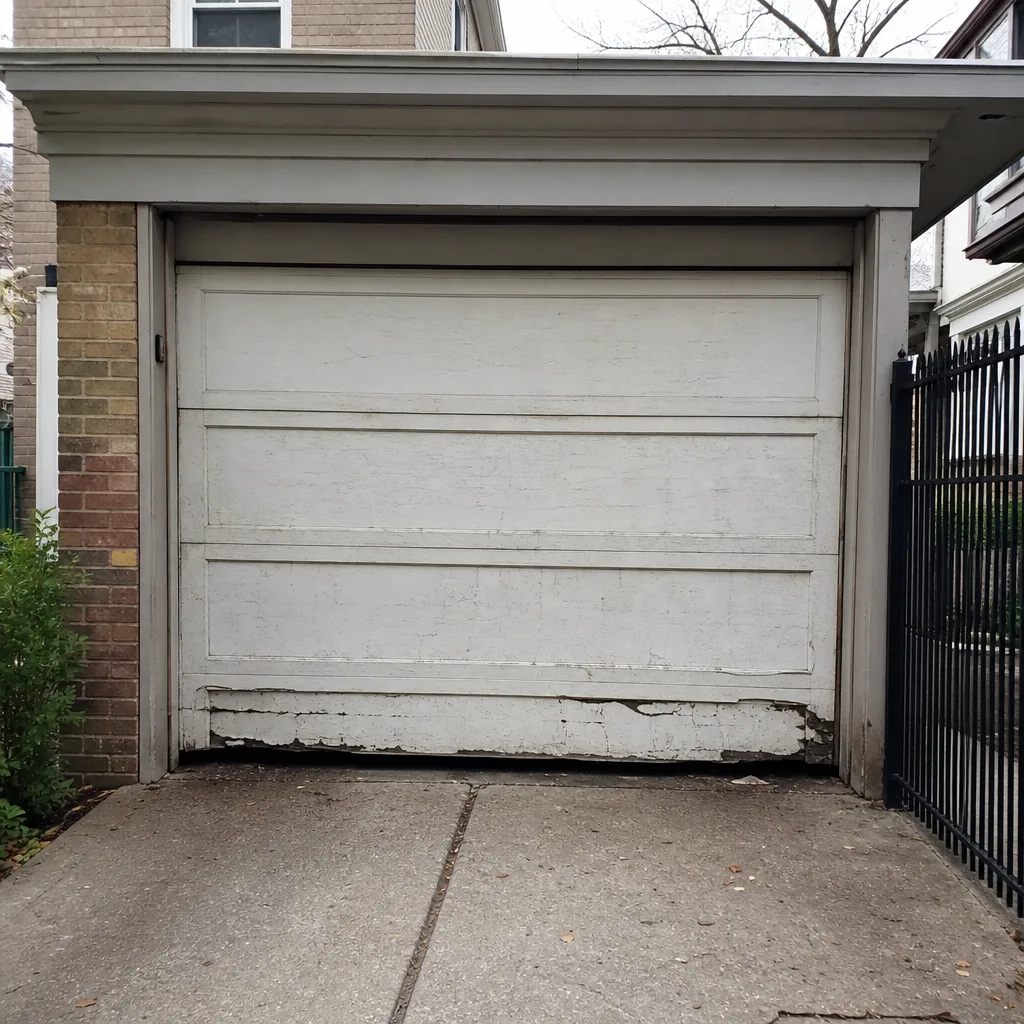
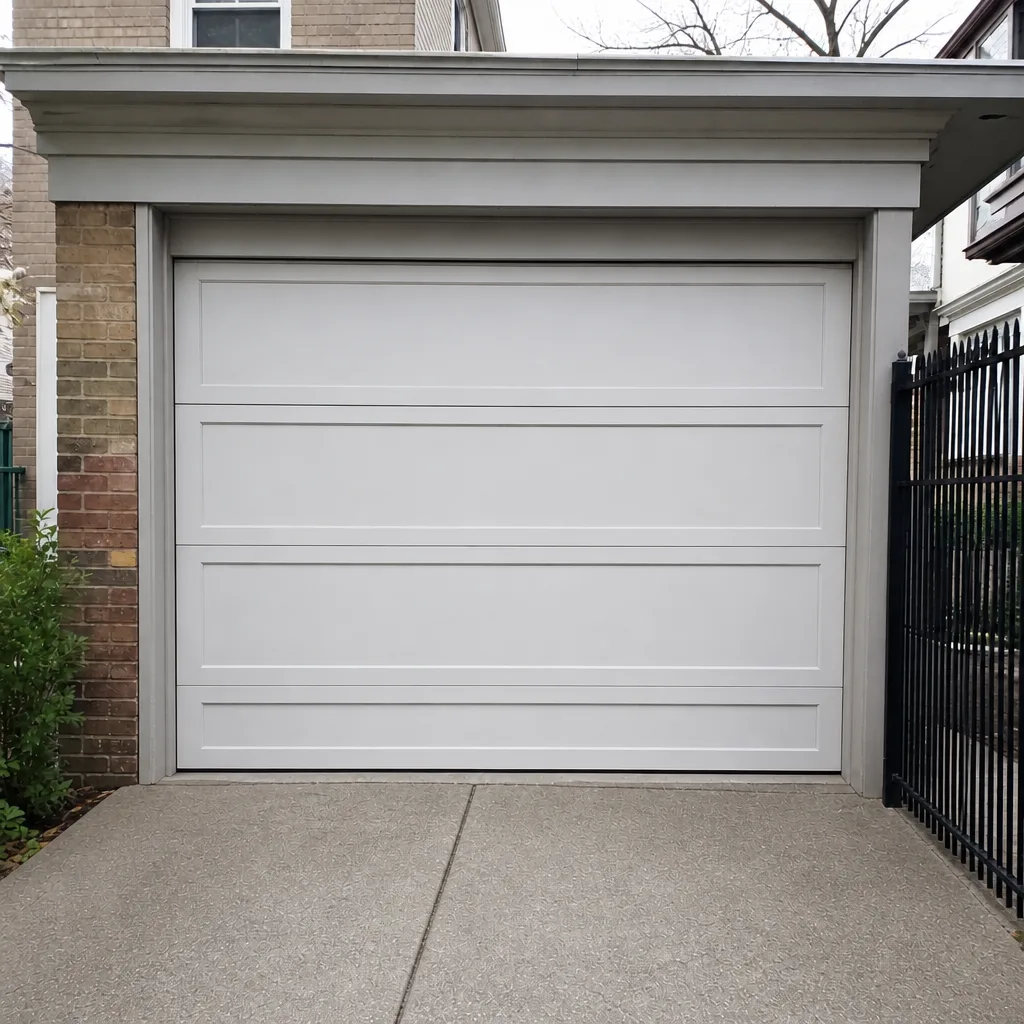
See the difference
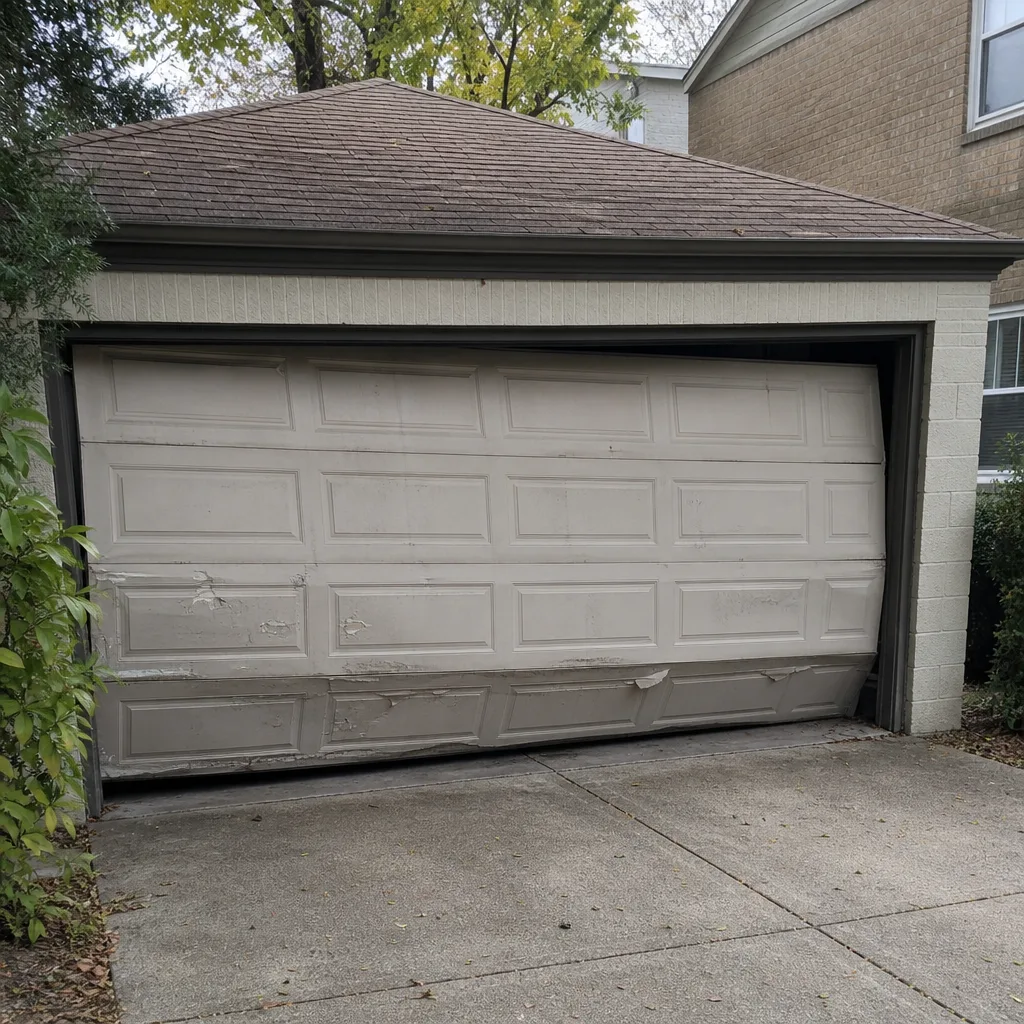 Before
 After
 Before
 After
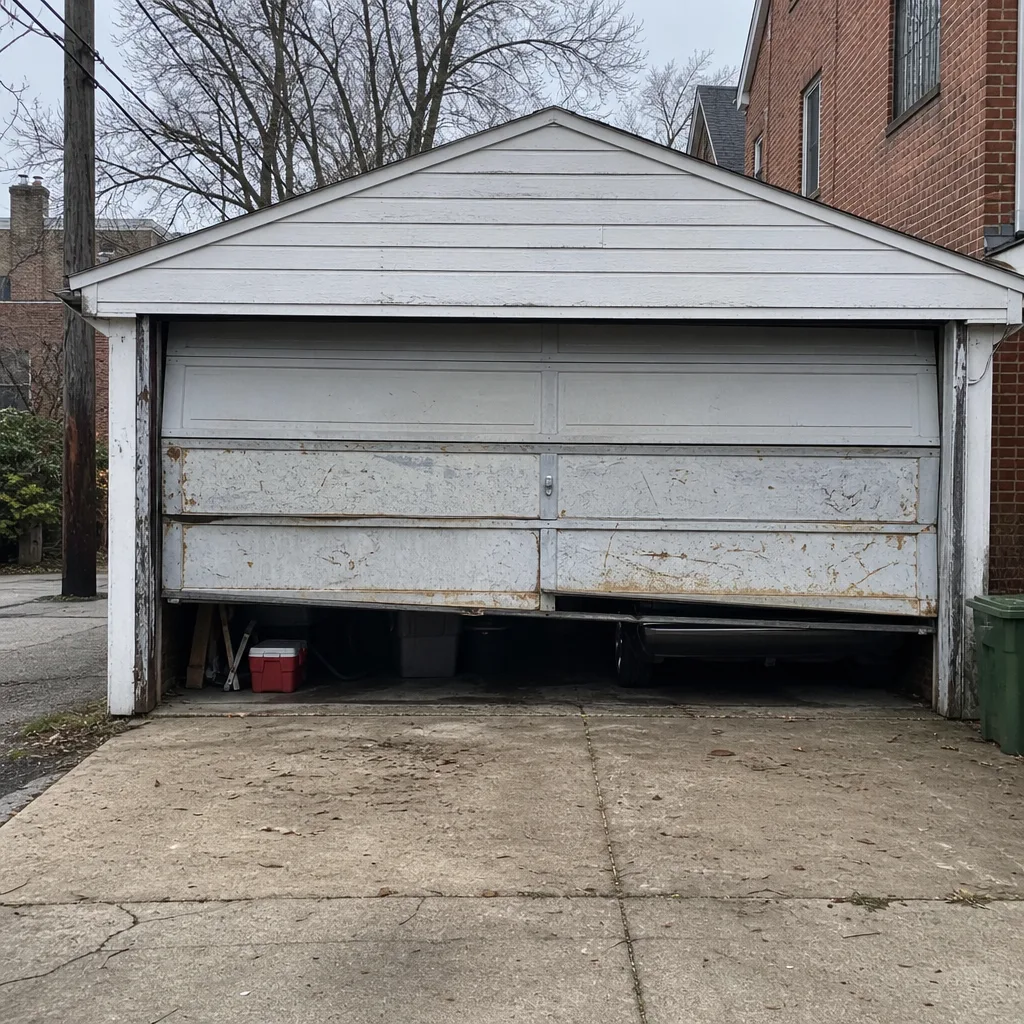 Before
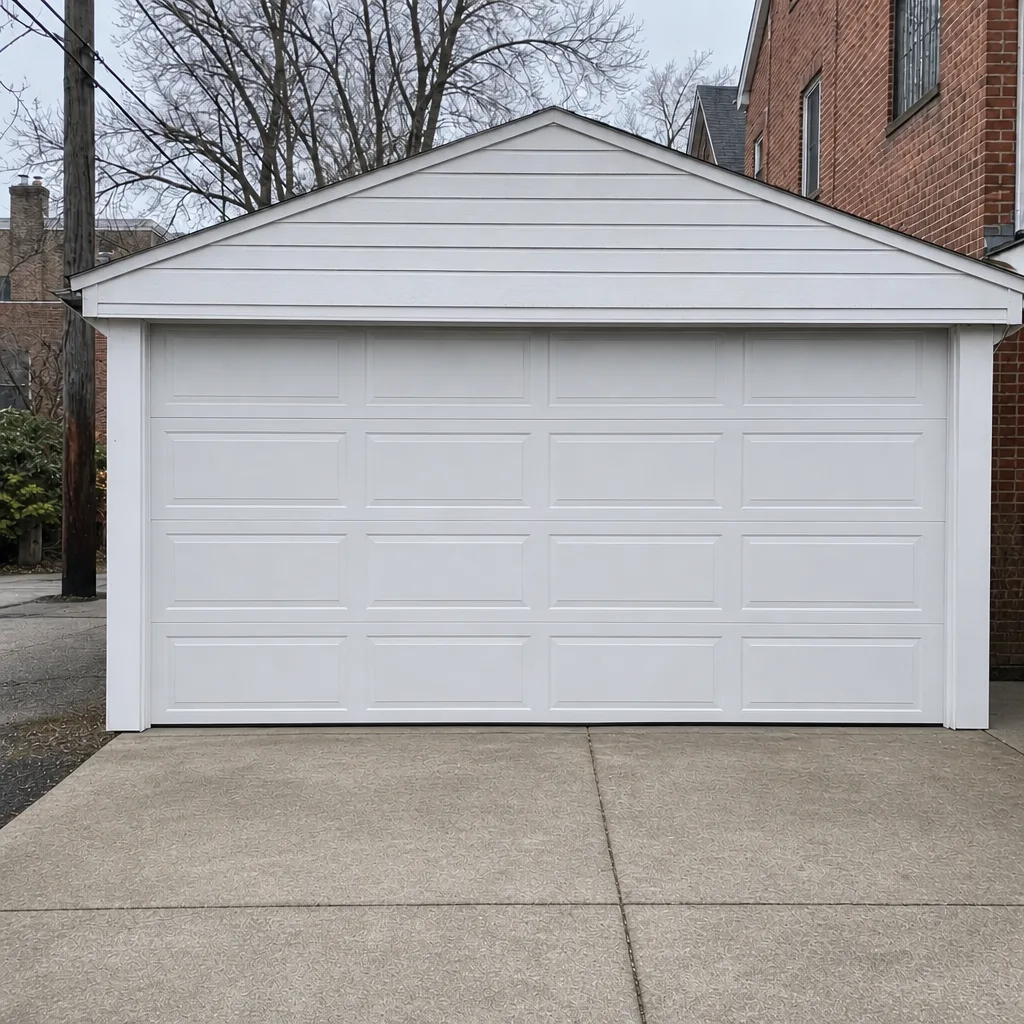 After
When to Call a Professional
Call a professional when the door is heavy enough to require two hands to lift, when you can see a gap in the spring coil, when the door comes off its track, or when the opener has stopped responding and the safety reverse no longer works. These aren’t homeowner jobs. Springs store enough force to cause serious injury, and off-track doors fail in ways that can’t be predicted from the outside.
Call us sooner if you’re not sure whether it’s safe to use the release, if the door is blocking a needed car, or if the opener is cycling without moving the door. Garage Door Repair Lincoln Park offers free estimates in Lincoln Park. Call (855) 658-5155 to schedule. We answer 24/7 and dispatch from 7am to 7pm, Sunday through Friday.
When we arrive, we’ll confirm what’s wrong, walk you through the fix and what it will cost, and quote a price before any work starts. For anything outside the diagnostic scope, we refer out only if it’s not garage-door related, and that’s rare in this trade.
Frequently Asked Questions
Stop the opener and don’t force the door. Then look at the spring: if it’s intact and only the motor has stopped, the release cord is safe. If the spring looks broken or the door feels extremely heavy, don’t touch the release and call (855) 658-5155. We answer 24/7 and can walk you through what’s safe from your description.
Look at the spring coil. A broken torsion spring shows a visible gap, and the door becomes extremely heavy. If the door lifts with normal resistance and only the opener has failed, the spring is intact. This distinction is the single most important one for a garage door emergency in Lincoln Park, because it changes the safe response completely.
Yes, if the springs are intact. A power outage with functional springs is the ideal time to use the release: the spring does the lifting. If the spring is broken, don’t. Your door won’t stay balanced and could drop the moment you pull.
Estimates are free, and the price is set per job by the written estimate. If a spring has failed, a matched pair is usually replaced together, so pricing is quoted for the pair rather than one spring alone. We confirm the exact cost before any work starts. Call (855) 658-5155 for an exact quote.
We handle urgent calls same-day when dispatch is open. We answer 24/7, with fast dispatch from 7am to 7pm, Sunday through Friday. A call outside dispatch hours is booked into the next opening, and we tell you the time when you call.
Often yes, if you stop the door immediately and don’t force it. Track damage with intact panels is usually a track repair, sometimes with a roller or hinge replacement. If the panels have been bent by a forced run, the repair grows. Call, describe the impact and where the track is bent, and we’ll arrive with the right parts. For a full replacement quote, we can visit and measure.
We’re factory-familiar with the industry’s major brands: LiftMaster, Chamberlain, Genie, Clopay, Amarr, Wayne Dalton, Craftsman and Raynor. We work on the brand already in your garage. Whatever the opener or door manufacturer, the tools and parts flow through the same repair process.
The Bottom Line
Garage door emergencies in Lincoln Park follow three patterns, and each one has a different protocol. Winter morning failures need spring-versus-opener diagnosis before you touch the release. Post-storm alley debris needs a slow cycle check and a bent-track inspection. Power outages need a battery backup test done in advance. The thread that runs through all three: know which failure type you’re dealing with before you act, describe it accurately when you call, and let a professional handle anything involving a broken spring or an off-track door. Garage doors only, springs in scope, parts on hand. That’s the whole answer to the emergency question.
For a free estimate or to schedule, call (855) 658-5155. We answer 24/7. Fast dispatch from 7am to 7pm, Sunday through Friday.
To go deeper on any specific repair, start with Garage Door Repair Lincoln Park and we’ll route you to the right page.
Written by the team at Garage Door Repair Lincoln Park.